Publications
Peer-reviewed articles
Mobilities and Ethnic Studies: A Roundtable Discussion (Co-author)
Ethnic Studies Review, 2023
Following the publication of a 2022 special issue in the journal Mobilities, several of the contributing authors and editors gathered virtually on July 26, 2022. Drawing upon the work included in the collection called “Mobilizing Indigeneity and Race Within and Against Settler Colonialism,” the participants discuss how they came to the subject of mobilities, how this concept impacts their work, and the ways it intersects with the fields of Ethnic Studies and Indigenous Studies. The special issue editors Carpio, Barraclough, and Barnd interview and facilitate the discussion between authors Vasquez Ruiz, Toomey, Katz, and Fraga. This article includes a reading list of scholarships used for the special issues of race, indigeneity, and mobility.
Mobile Postcards: Zapotec Imagined Mobility
Mobilities, 2022
In this essay, I discuss YouTube travel videos produced by Zapotec Indigenous communities across the US–Mexico border. These point-of-view travel videos depict the videographer’s arrival in Indigenous communities along the International Highway 190 in Oaxaca, Mexico. To those unfamiliar with the regions represented, they are seemingly devoid of content. Still, for undocumented Zapotec viewers who reside away from their homelands, these videos offer them a way to exercise an imaginative mobility. Drawing from the fields of mobility studies, media studies, and critical Indigenous studies, I examine how these YouTube videos are mobile postcards that help immigrant communities stay connected to their communities and challenge uneven structures that deny them the ability to travel freely across borders. In this essay, I contextualize how settler colonial structures in both Mexico and the US intervene in the lives of Zapotec communities in ways that attempt to dictate Indigenous people’s mobility.
Building Confianza: Collective Public History in the Time of Distance – a Joint Reflection from the Boyle Heights Museum Team and Ethnic Studies: A Roundtable Discussion (co-author)
History, The Journal of the Historical Association, 2022
How do you preserve the history of a neighbourhood undergoing change? How do you honour its residents and their legacy of lucha (struggle)? How do you uplift the voices of community members, students and researchers of colour in the museum world? In this joint reflection, members of the Los Angeles Boyle Heights Museum (BHM) reflect on their collaborative endeavours to research, preserve and celebrate the multi-ethnic history of this Los Angeles (LA) neighbourhood. As a research, exhibition and educational project led by professors, graduate students, undergraduate students and community members, the BHM team uses a horizontal leadership model to uplift and tell the stories of a neighbourhood. The BHM team members discuss the various approaches they use to build confianza – trust – among themselves and within US Latinx migrant communities. By centring confianza as both a method and a theoretical framework for public history work, the team demonstrates how it builds a more inclusive, family-centred and intergenerational museum experience. Through building confianza, the team has been able to pivot their work to address and manoeuvre new challenges during the Covid-19 pandemic.
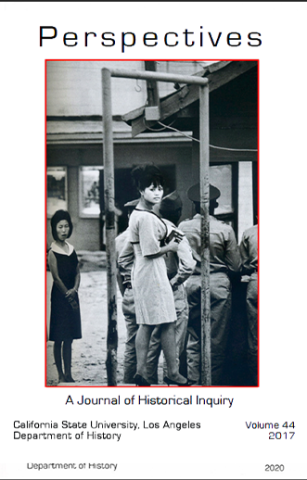
Solving the “Indian Problem:” Indian Relocation to Los
Angeles County in the 1950s and 1960s
Perspectives a Journal of Historical Inquiry, 2017
The Indian Relocation Program sought to encourage
Native American relocation from the reservations to urban centers
through employment and skill development programs. The program was a part of the larger series of “termination” policies
passed by Congress in an effort to reduce tribal dependence on the
federal government.4 Despite the policies’ impact, the relocation
of Indigenous peoples to Los Angeles has received little attention
in academia. Although anthropologists and historians have studied
the effects and limitations of this policy through broad social
historical perspectives, none has considered how space or the lack
of space affected the ways in which Indigenous migrants
constructed community. This article argues that an analysis of
physical and imagined spaces complicates our current
understanding of Indigenous migratory experiences. In utilizing
oral histories of Indigenous migrants and news articles published
by the Los Angeles Times, it is evident that the experiences of
Indigenous migrants disrupted stereotypical notions of
“indigeneity.”
Book Chapters
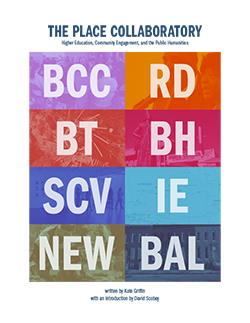
The Boyle Heights Museum: Creating a Museum from the Inside Out
The Place Collaboratory Higher Education, Community Engagement, and the Public Humanities, 2024
Book Reviews & Artist Statements
Spatial and Discursive Violence in the US Southwest
Latino Studies, 2023
Latin American Indigeneities through Settler Colonialism, Neoliberalism, and Cyberspace
American Quarterly, 2021
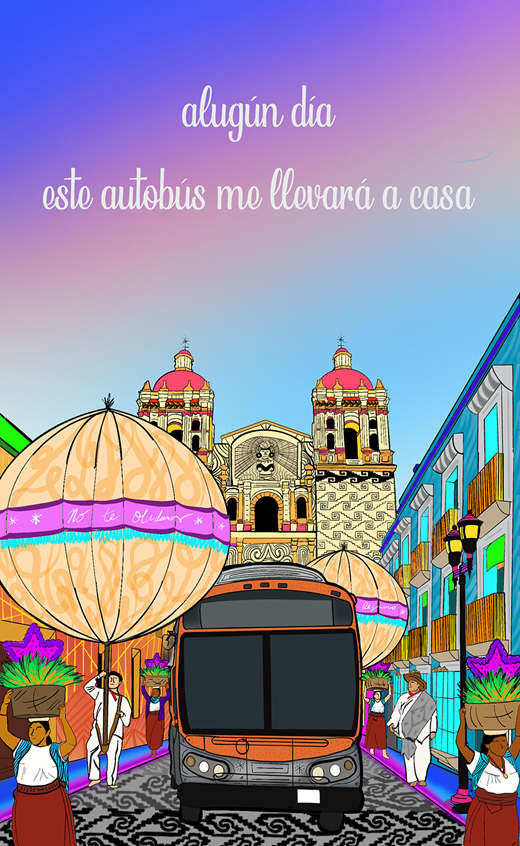
Algún Día Este Autobus Me Llevará a Casa / Someday This Bus Will Take Me Home
Ethnic Studies Review, 2023
 Michelle Vasquez Ruiz, PhD